
When a tool goes missing or a customer disputes what happened, the first question is always the same: who did what, and when? Asset Giant logs every change automatically — time-stamped and attributed — so you have a complete audit trail without anyone maintaining one.
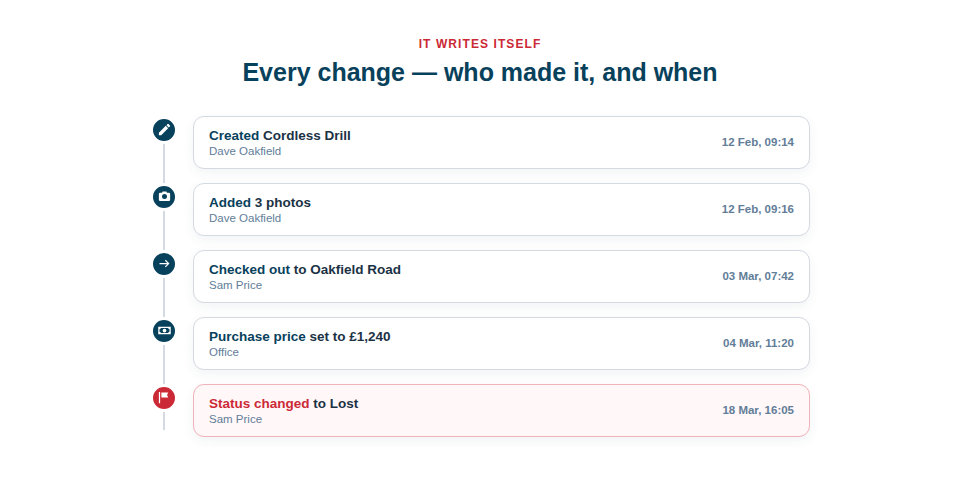
A record that writes itself
Because the history is generated as a by-product of normal use, it’s both effortless and trustworthy:
- Per-asset history. Open any item to see every edit, move and status change it has been through.
- An account-wide trail. Review all recent activity across the business, not just on a single asset.
- Who and when. Every entry is stamped with the user and the time, so there’s no ambiguity about authorship.
Accountability and genuine peace of mind
A reliable audit trail quietly improves how a business runs. It settles disputes with facts rather than opinions — “the record shows it went out to that job on the 14th, checked out by Dave”. It supports compliance, where being able to demonstrate what happened and when is often a requirement. And it has a gentle preventative effect: when people know that changes are recorded and attributable, records tend to be treated with more care.
It needs no effort to maintain:
- Your team uses the system normally — adding, editing, scanning and moving assets.
- Each action is logged automatically against the asset and the user.
- When you need to know what happened, you open the history and read it.
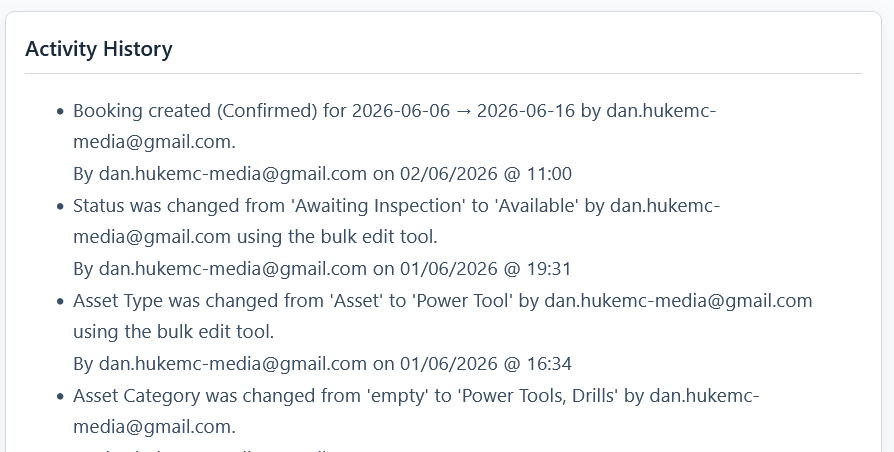
Best Practice: When investigating a discrepancy, start with the affected asset’s own history before anything else. It usually shows you exactly when and how things diverged, turning a guessing game into a quick read.
For more, see See Who Changed an Asset, and When.