
Everything about an item, in one place
A profile is built from a set of clearly organised sections, so you can capture as much or as little as you need without the record ever feeling cluttered:
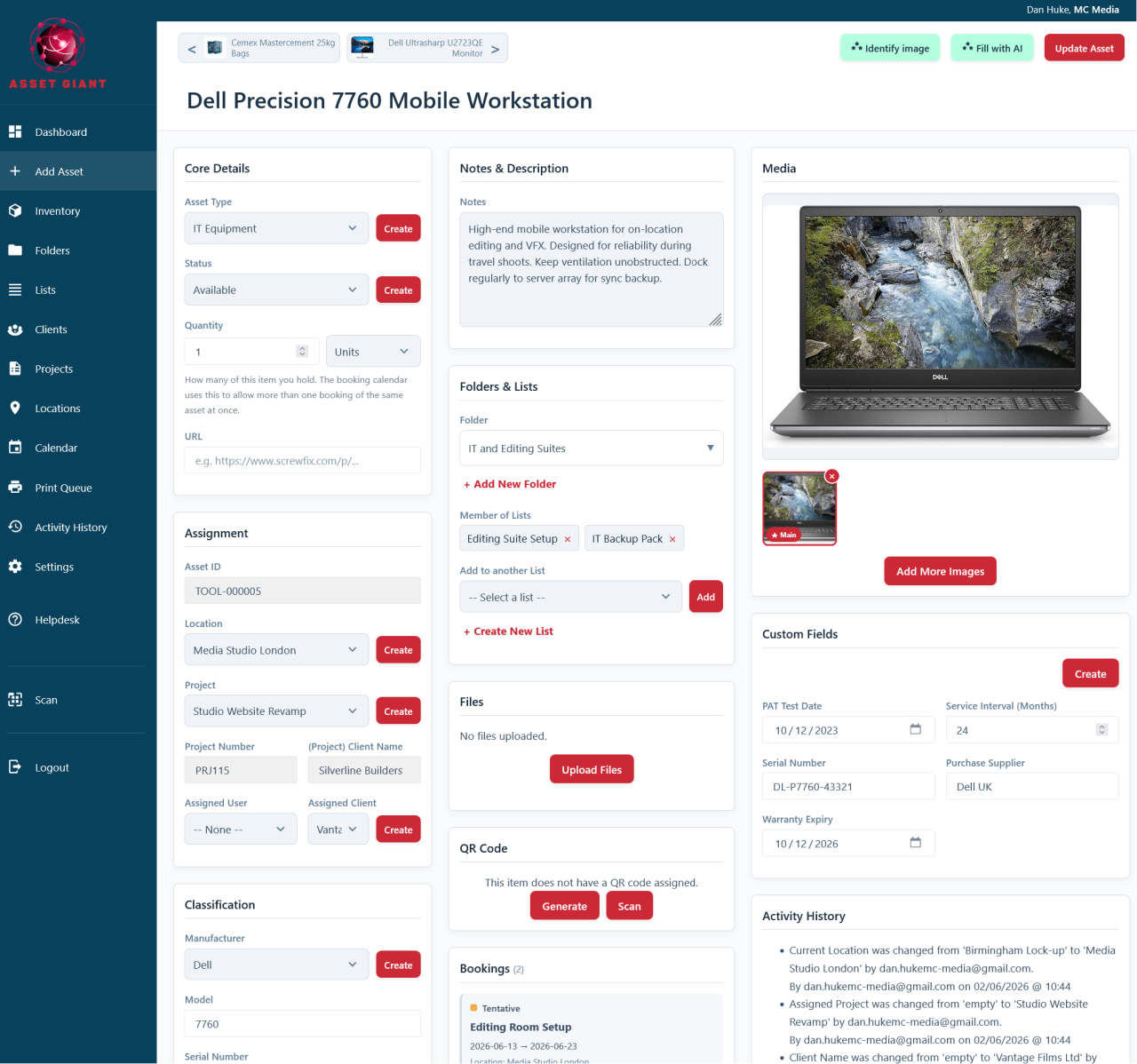
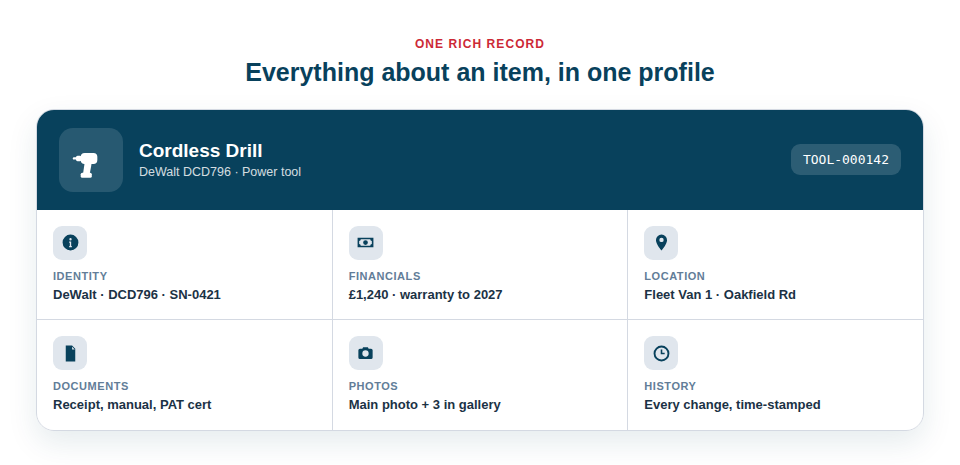
- Identity — the asset’s name, manufacturer, model and serial number, so it can be precisely identified, re-ordered or reported to the police if it’s stolen.
- Quantity — how many you hold and the unit it’s measured in, so the same record works for a one-off tool (just “1”) or for bulk stock and consumables like fixings, cable and PPE. See Track Quantities & Consumables.
- Money — purchase price, supplier, purchase date and warranty expiry, turning your inventory into a genuine financial register.
- Where and who — its current location, the project it’s committed to, and the person it’s assigned to.
- Proof — photos of the item and its condition, plus attached manuals, receipts and certificates.
- History — an automatic, time-stamped timeline of every change ever made to it.
- Your own fields — any extra information unique to your business, captured through custom fields.
One source of truth your whole team trusts
Because the profile lives in the cloud and is shared, the office sees exactly the same record as the person standing next to the tool on site. There’s no “which spreadsheet is the latest one?”, no conflicting copies, and no waiting for someone to email an update. A change made on a phone on site is instantly visible to everyone.
That shared, trustworthy record pays off in countless small moments: settling a dispute about when something went out and to whom, finding the manual for an awkward setting without leaving the job, or producing a warranty receipt the instant it’s needed. Individually these are minor; together they add up to a business that runs with far less friction.
Best Practice: You don’t have to fill in every field on day one. Capture the essentials — a photo, the name and the location — when you add an item, then enrich the profile over time as receipts, serial numbers and documents come to hand.
To see how a profile is laid out and how to fill one in, see Everything on an Asset’s Record, Explained.