
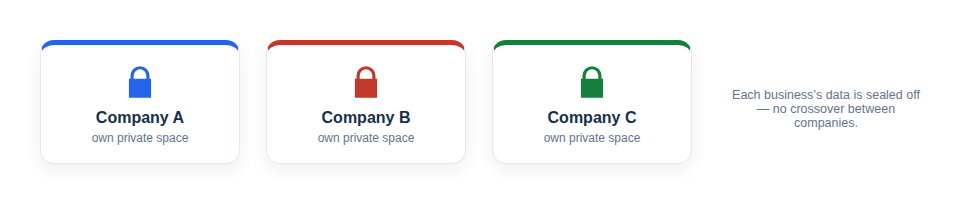
Your records stay private to your business and protected by sign-in, on a platform that’s actively maintained and kept current. It’s the steady combination of controlled access, sensible defaults and ongoing upkeep that makes it safe to put your whole operation in one place.
Access on your terms
The most important protection for everyday data is simply controlling who can get to it, and that’s firmly in your hands:
- Login-protected access. Your inventory sits behind a sign-in. The app, your private QR codes and your internal pages all require authentication, so nobody stumbles into your records.
- You decide who’s in. Only the people you invite can see your inventory. Add your team when you’re ready and remove access the moment someone leaves.
- Roles that limit reach. Each person gets a role, so day-to-day staff can do their job without having the run of everything. You can read more in Add Your Whole Team.
- Public only when you choose. Codes and pages are private by default; anything customer-facing is something you deliberately make public, never the other way around.
Built and maintained responsibly
Good security isn’t a box you tick once — it’s a practice you keep up. Asset Giant runs on well-established, widely-used web infrastructure and is maintained with regular updates and security best practice, so the platform underneath your data keeps pace with the wider web rather than standing still. You don’t have to think about patching, hosting or upkeep; that’s our job, and it carries on quietly in the background while you get on with running your business.
That ongoing care is what turns a one-off promise into lasting reassurance:
- Your records stay behind a login, available only to the people you’ve invited.
- Each person’s role keeps their access proportionate to what they actually need.
- The platform is kept up to date, so security improvements arrive without any effort on your part.
Confidence to put everything in
The pay-off is straightforward. Because access is controlled and the platform is properly looked after, you can confidently commit your whole operation to it — the values, the locations, the client connections — instead of holding sensitive details back out of caution. And a complete inventory is a far more valuable one than a cautious, half-finished list. The protection isn’t just a comfort; it’s what makes it sensible to be thorough, which is where the real benefit of an asset system comes from.

Best Practice: Use roles to keep access appropriate — give the wider team day-to-day Member access and reserve full Admin control for the few who genuinely need it. It’s the simplest, most effective way to keep your data both useful and well-guarded.