
A crew that arrives to find the box of fixings empty loses half a day — yet most systems can’t track consumables at all, only one-of-a-kind items. Asset Giant lets you track stock by quantity and unit of measure, so consumables live alongside your tools and are just as easy to check.
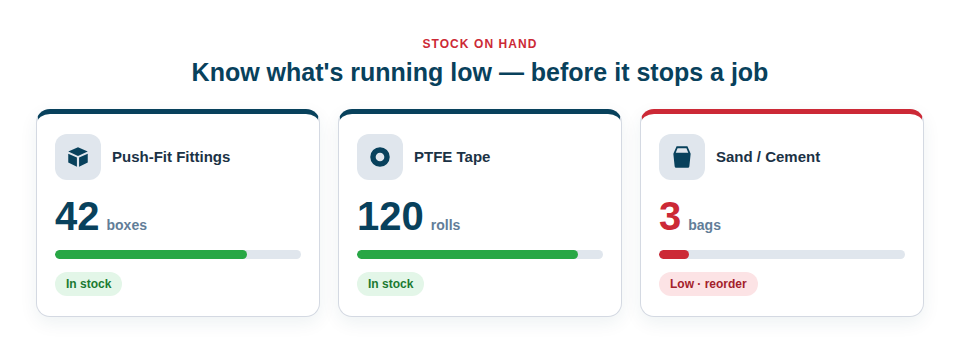
Built for stock as well as one-off assets
Treating consumables properly means recording not just what you have, but how much, in units that make sense for the material:
- A quantity on hand for every stock item, so you always know where you stand.
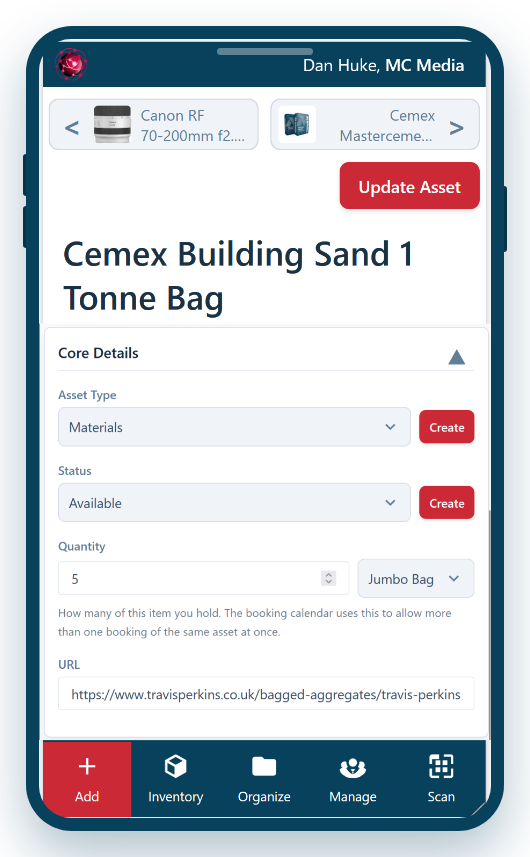
- Real-world units of measure — each, box, pack, roll, metre, square metre, tube, jumbo bag, pallet and more — so a record reads naturally rather than forcing everything into “1”.
- The same search, filters and locations as the rest of your inventory, so consumables can be assigned to vans, stores and sites just like tools.
One system instead of a separate stock spreadsheet
The practical win is that you stop juggling two systems. The expensive, serial-numbered kit and the everyday materials sit side by side, filtered and organised together. When you’re loading a van for a job, you can see both the tools and the consumables it should carry; when you’re reviewing a store, you can see what’s running low before it runs out.
A typical rhythm looks like this:
- Add your common consumables once, with a sensible unit of measure for each.
- Adjust the quantity on hand as stock comes in and goes out to jobs.
- Glance down the list — or filter — to spot anything low, and reorder before it stops a job.
Best Practice: You don’t need to count every screw. Track the consumables whose absence actually halts work — the critical fixings, gases, discs and PPE — and keep the quantities roughly current rather than perfect.