
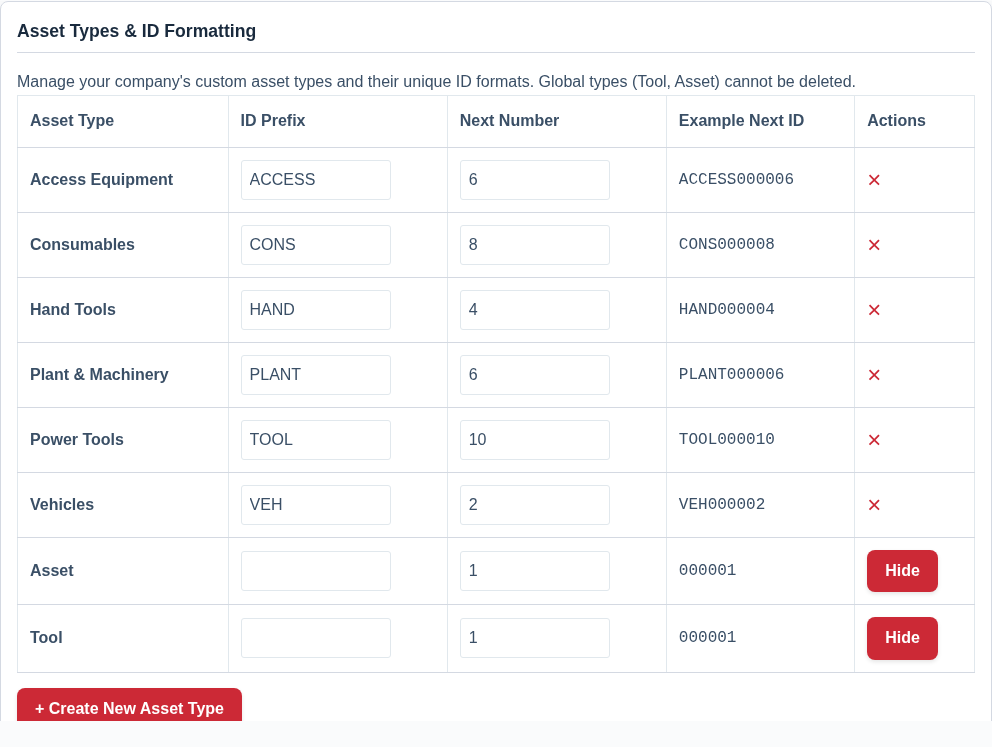
Set your own prefixes and numbering for each type of asset, so IDs read naturally. A tool becomes TOOL000123 and a vehicle VEH000004 — instantly recognisable on any label, search or export.

IDs that match your world
The customisation is simple but it makes the whole inventory more legible:
- Custom prefixes per asset type — TOOL, PLANT, VEH, CONS, or whatever fits your business — so a reference is self-describing.
- Control of the next number — set where each sequence starts, which is exactly what you need when continuing from an old system so nothing clashes.
- Automatic from then on — once configured, every new asset of that type is stamped with the correct, unique ID with no effort and no risk of duplication.
Consistency without the housekeeping
The point of setting this up is that it then runs itself. You define the format once, and from that moment every asset slots into a tidy, predictable scheme automatically. There’s no manual numbering, no checking whether a reference is already taken, and no inconsistency creeping in as different people add items. The result is a professional-looking, internally consistent set of references across your entire fleet.
To put it in place:
- For each asset type, choose a prefix that reads naturally.
- Set the starting number — continuing from your previous system if you’re migrating.
- Add assets as normal; each receives the right ID in its type’s sequence.
Best Practice: Keep prefixes short and obvious — three or four letters that anyone would recognise. A long or cryptic prefix undoes the benefit, because the point is that the ID is instantly readable.
For more, see Change the Prefix and Numbering on Your Asset IDs and What Is an Asset ID? Numbering, Formats and Examples.